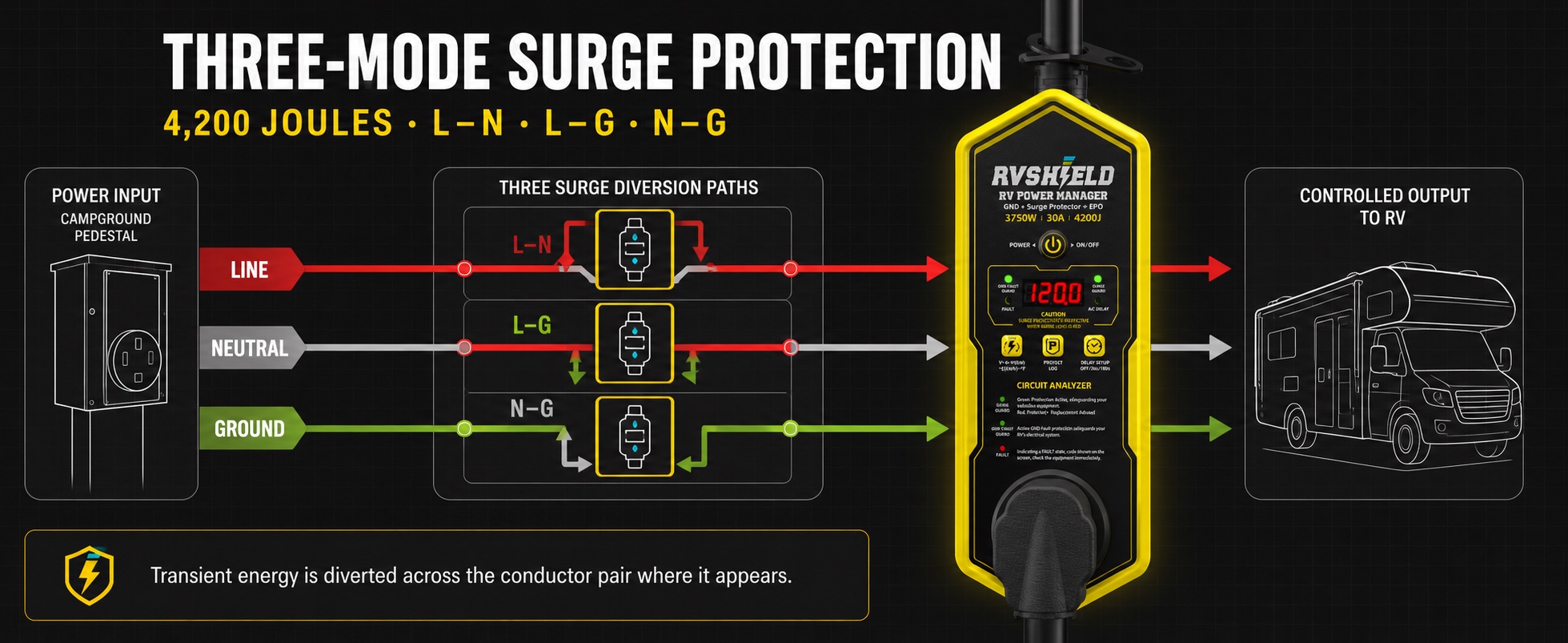
L–N
Hot-to-neutral transient path.
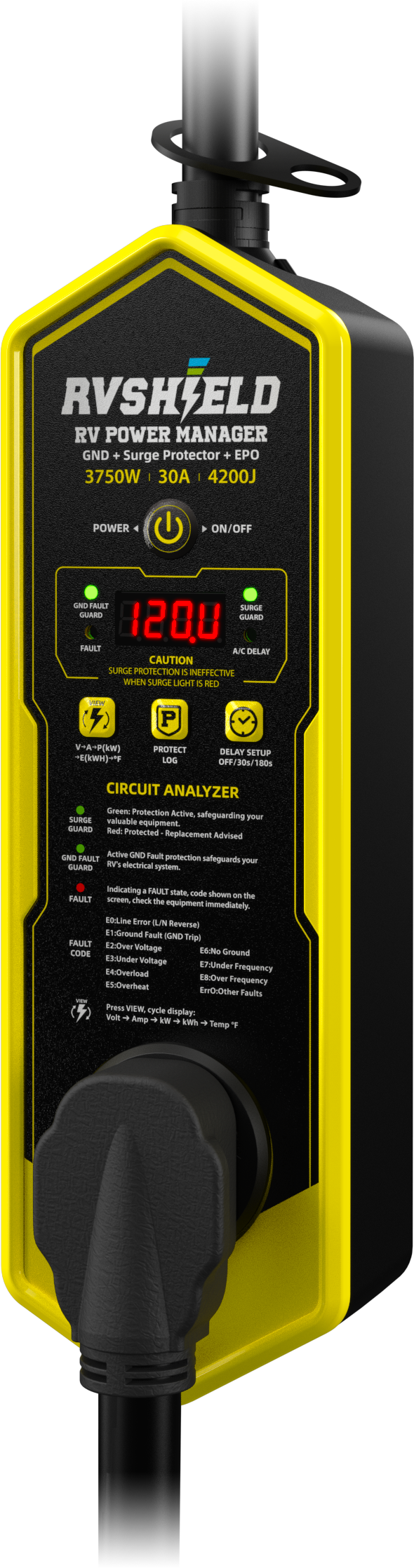
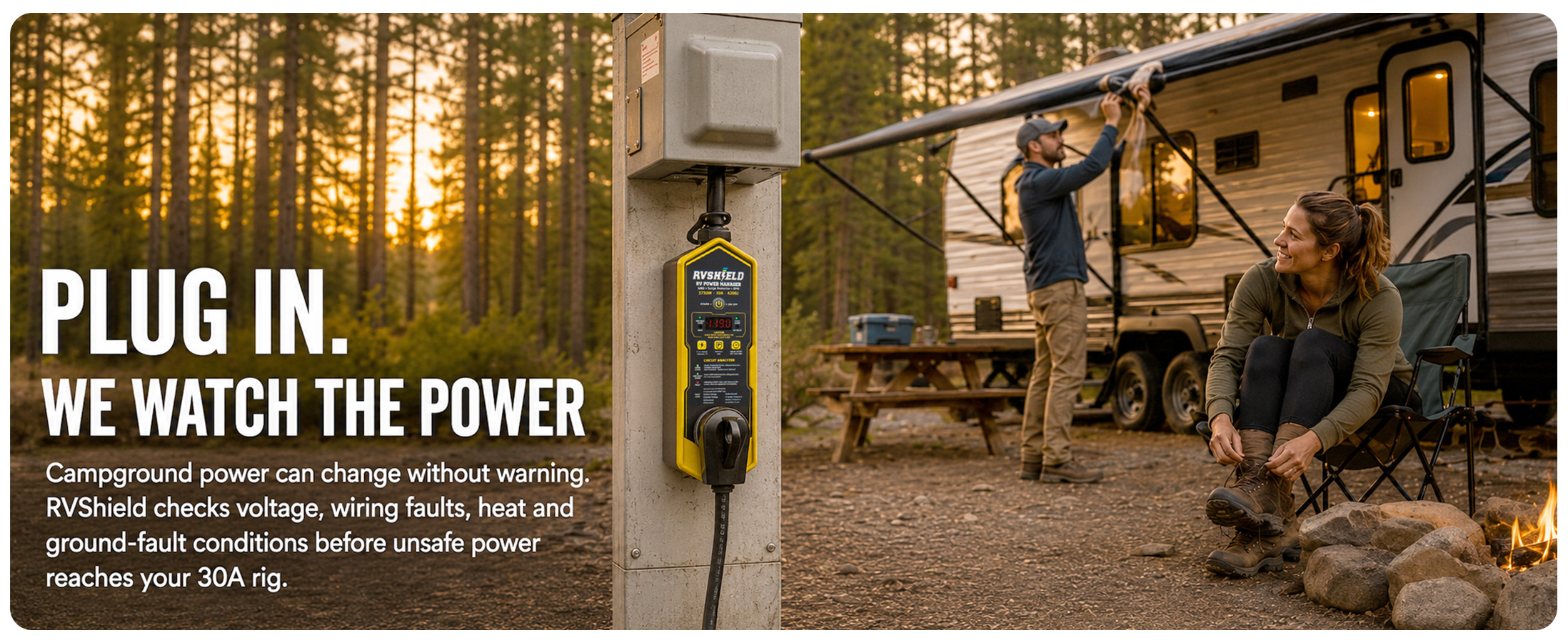
Surge capacity is only the beginning. RVShield evaluates campground power, tracks operating conditions, explains faults, and controls when your RV receives power.
Three protection paths respond across line, neutral, and ground before power continues to the RV.
Hot-to-neutral transient path.
Hot-to-ground transient path.
Neutral-to-ground transient path.
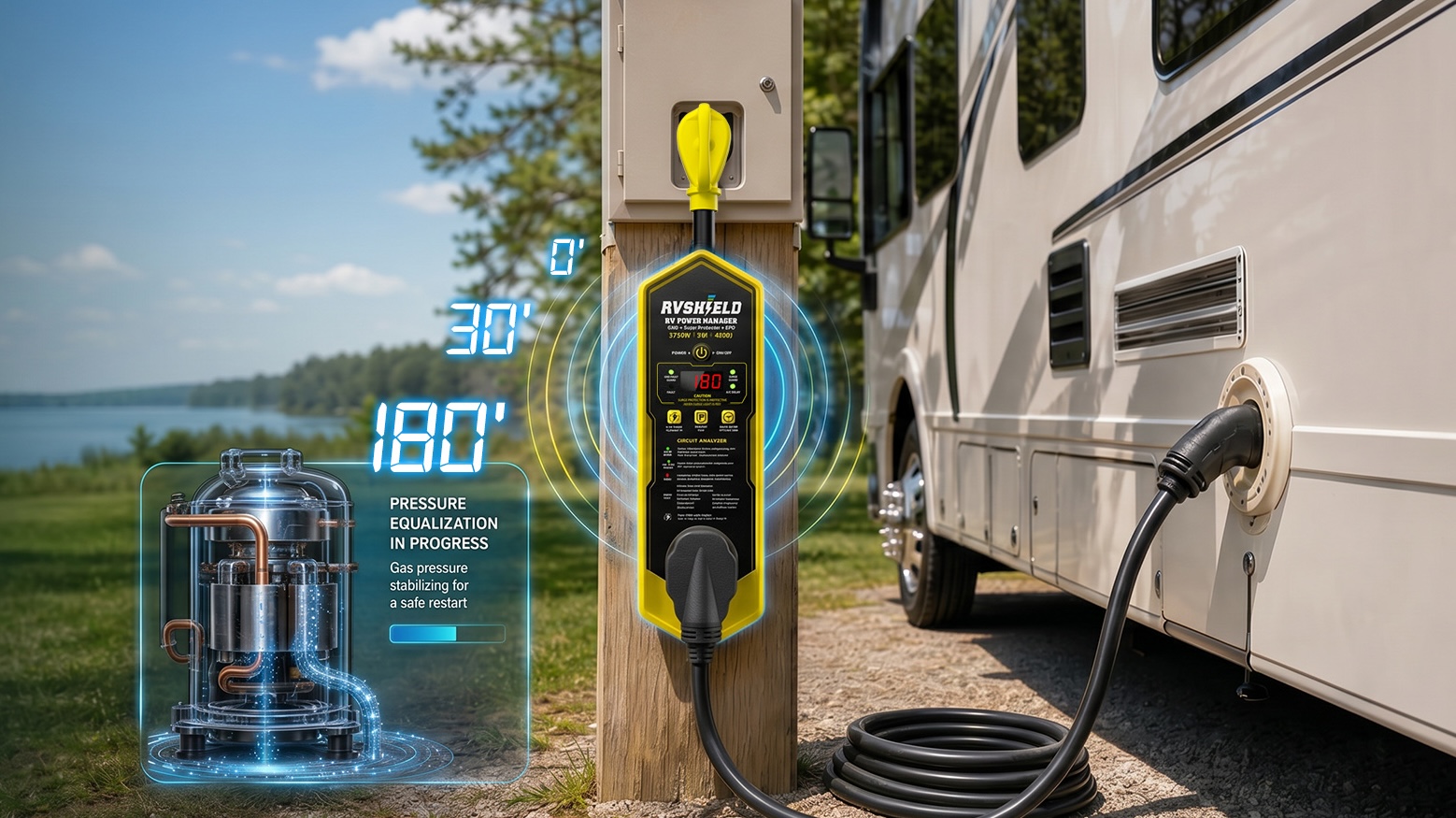
Choose an immediate, 30-second, or 180-second restart after power returns, based on the requirements of your connected equipment.
Immediate output when the A/C or controller already provides the required internal delay, or for loads that do not need compressor protection.
A short buffer that does not replace a longer manufacturer-specified restart interval.
A full three-minute compressor-protection delay after loss and restoration of power.
RVShield checks the connection before energizing your RV, then keeps watching while you camp. When a dangerous condition appears, it interrupts output and identifies the cause.
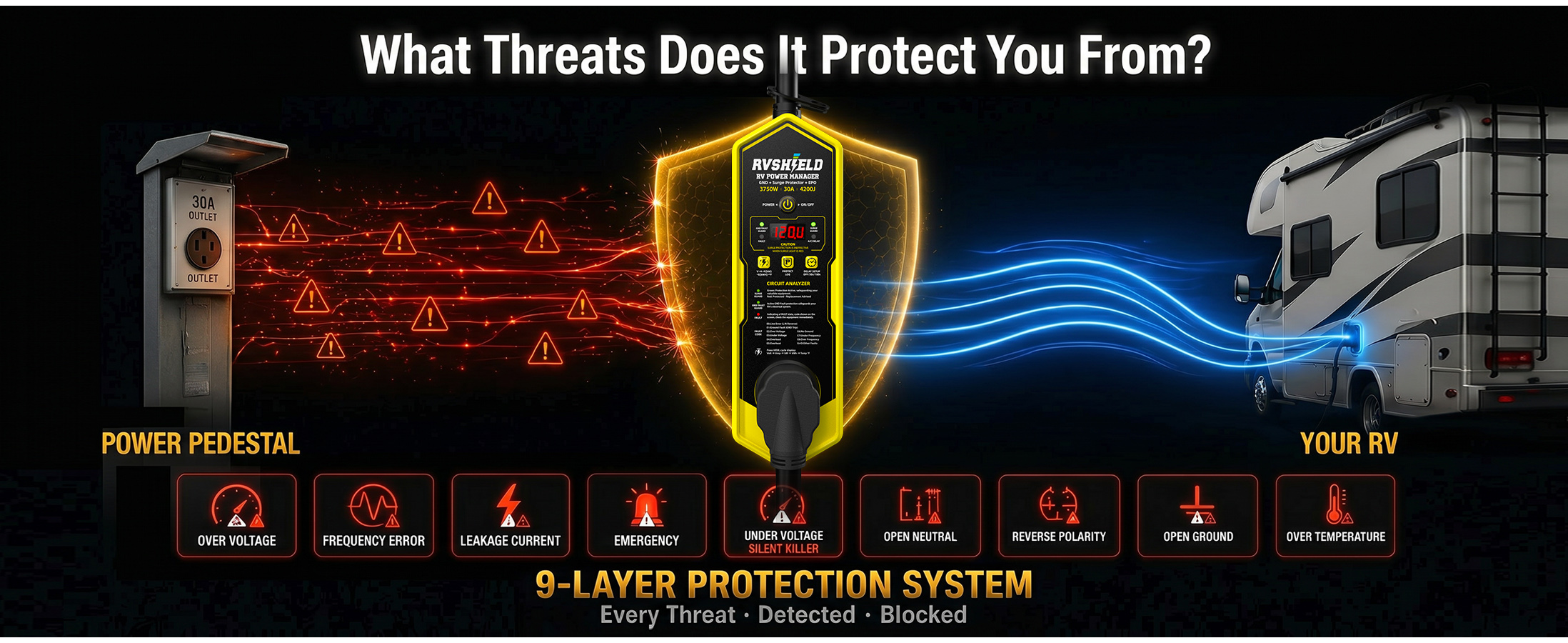
Excess campground voltage can burn motor windings and damage air conditioners, refrigerators, and control boards. RVShield interrupts output before sustained high voltage reaches the RV.
Low voltage makes motors draw more current, creating excess heat and shortened compressor life. RVShield disconnects the source until voltage returns to a safe range.
Unstable generator or campground frequency can affect motor speed and timing-sensitive equipment. Output is interrupted when frequency leaves the accepted window.
A missing safety ground leaves fault current without its intended path and can make the RV chassis hazardous. RVShield blocks output and identifies the pedestal fault.
A broken neutral can create unstable or dangerous circuit voltage and damage connected appliances. RVShield prevents the questionable source from feeding the RV.
Hot and neutral reversed at the pedestal can energize surfaces expected to be near neutral potential. RVShield detects the wiring error and keeps output off.
A sustained load above 30A overheats wiring, plugs, and worn connections. RVShield disconnects output before the overload continues feeding heat into the hookup.
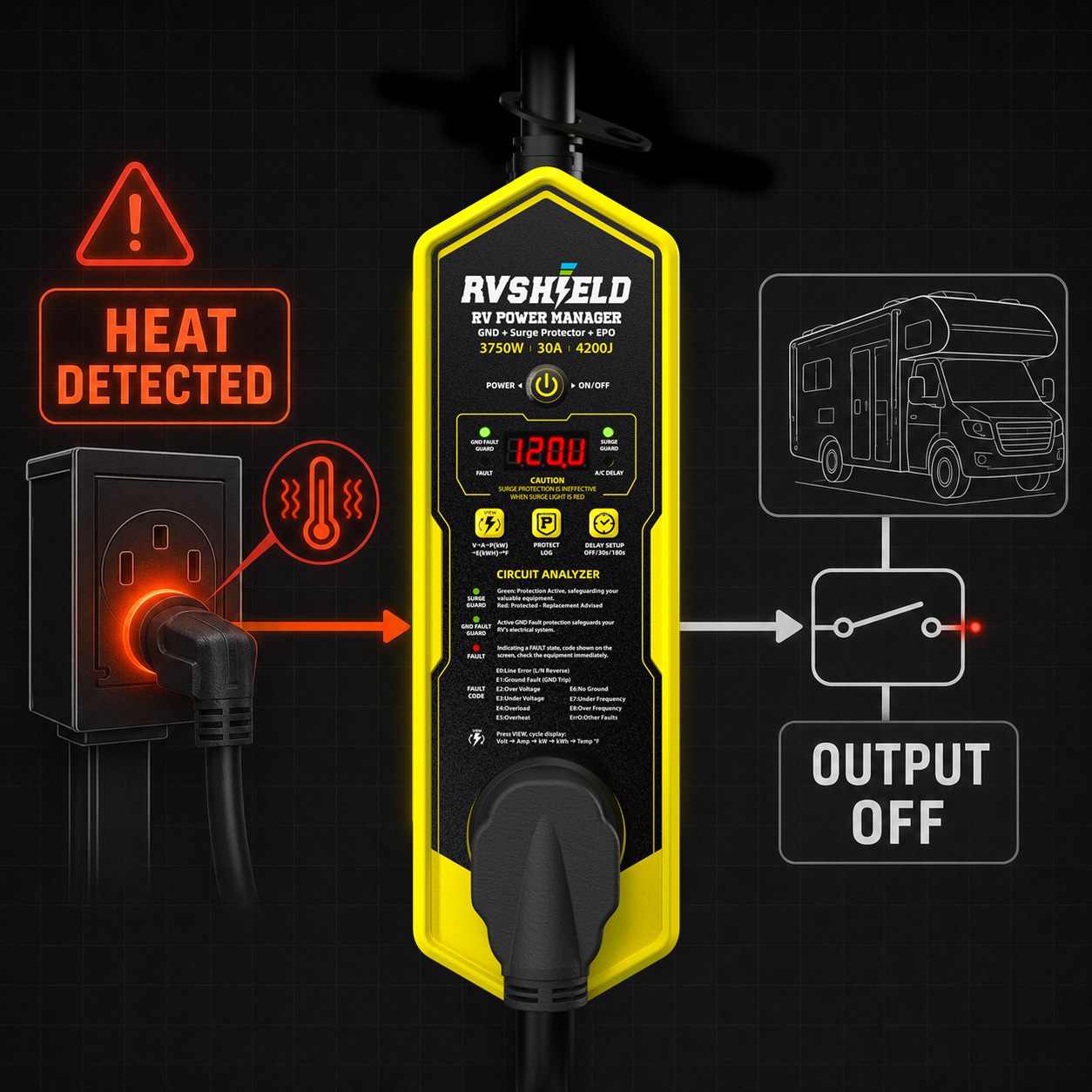
Heat from a loose or worn connection can build without a lightning event. At the thermal threshold, RVShield cuts output instead of allowing the condition to progress.
Damaged insulation, moisture, or a failing appliance can send current along an unintended path. RVShield detects equipment-level leakage and disconnects output.
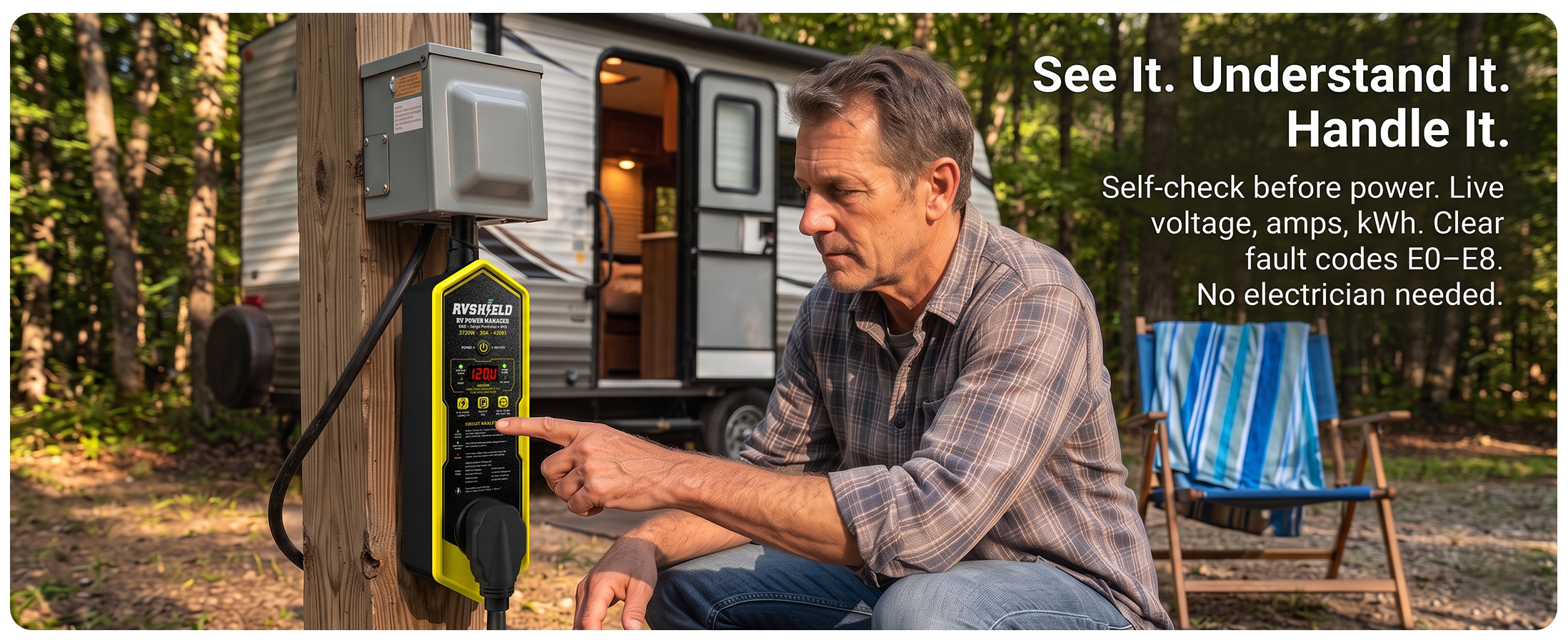
Each code turns an electrical condition into a clear next step.
| Code | Condition | What to do |
|---|---|---|
| E0 | Reverse polarity | Do not use the pedestal until its wiring is corrected. |
| E1 | Ground fault / leakage | Disconnect loads and inspect RV wiring and appliances. |
| E2 | High voltage | Wait for voltage to return to the safe window. |
| E3 | Low voltage | Reduce load or move to a stable pedestal. |
| E4 | Over current | Reduce connected load below the 30A rating. |
| E5 | Over temperature | Remove load and allow the device and connection to cool. |
| E6 | Open ground | Do not use the pedestal; contact campground staff. |
| E7 | Low frequency | Disconnect from the unstable or overloaded power source. |
| E8 | High frequency | Disconnect from the non-standard power source. |
| Err0 | Internal fault | Power cycle the unit; contact support if the code persists. |
Heat at a worn receptacle or loose connection can build without a dramatic surge. RVShield monitors internal temperature and interrupts output at the thermal threshold instead of continuing to feed a dangerous connection.
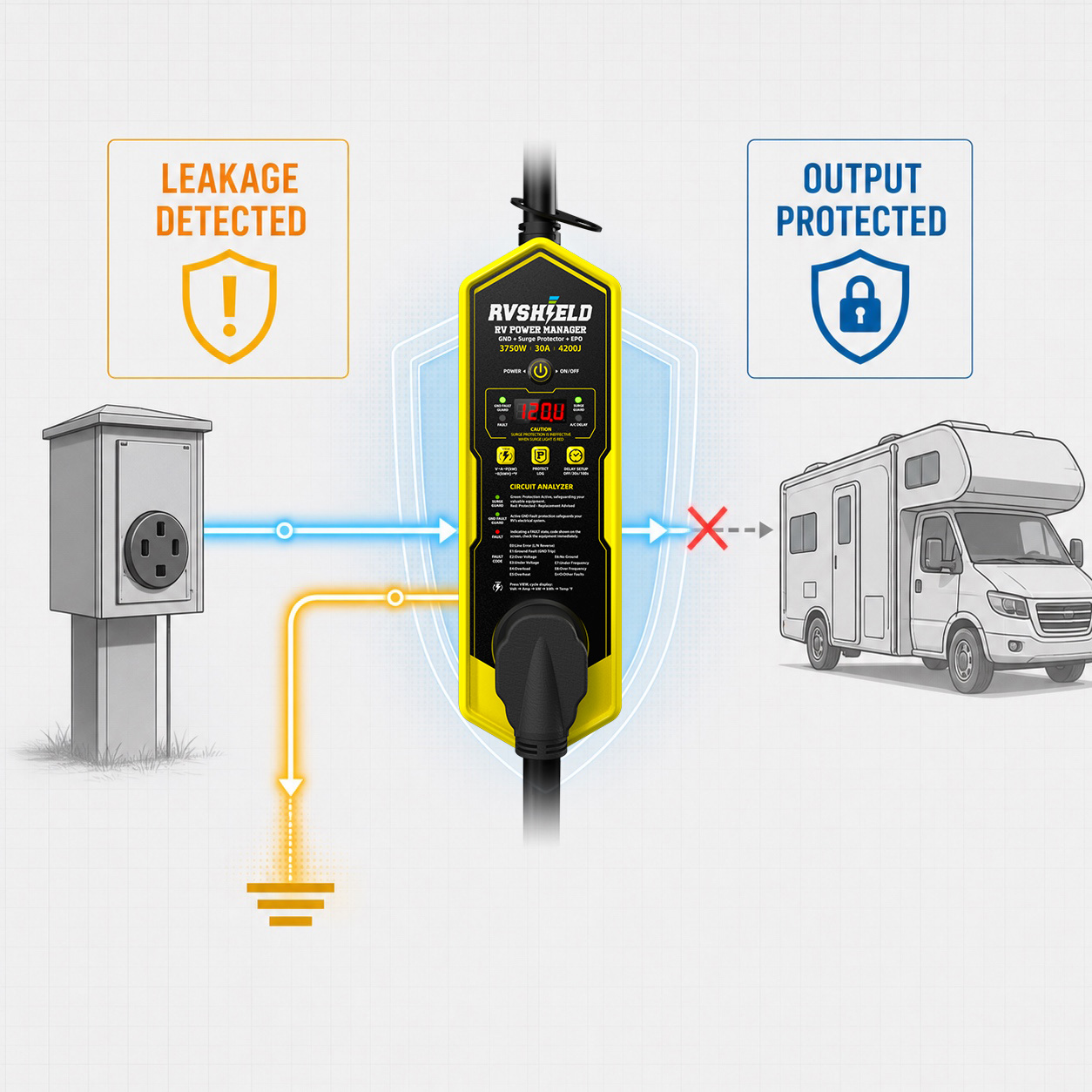
Leakage current can take an unintended path through damaged wiring, moisture, or a failing appliance. RVShield watches for this condition and disconnects output when the threshold is reached.
Pedestal → RVShield evaluation and monitoring → controlled output → your RV. The power manager stays between the source and the equipment you want to protect.
Wiring and source conditions are evaluated before output is energized.
Electrical and thermal conditions remain under continuous watch.
Output stays controlled, the code explains the issue, and the selected delay manages restart.