Free Educational Content

RV Electrical
Safety Hub

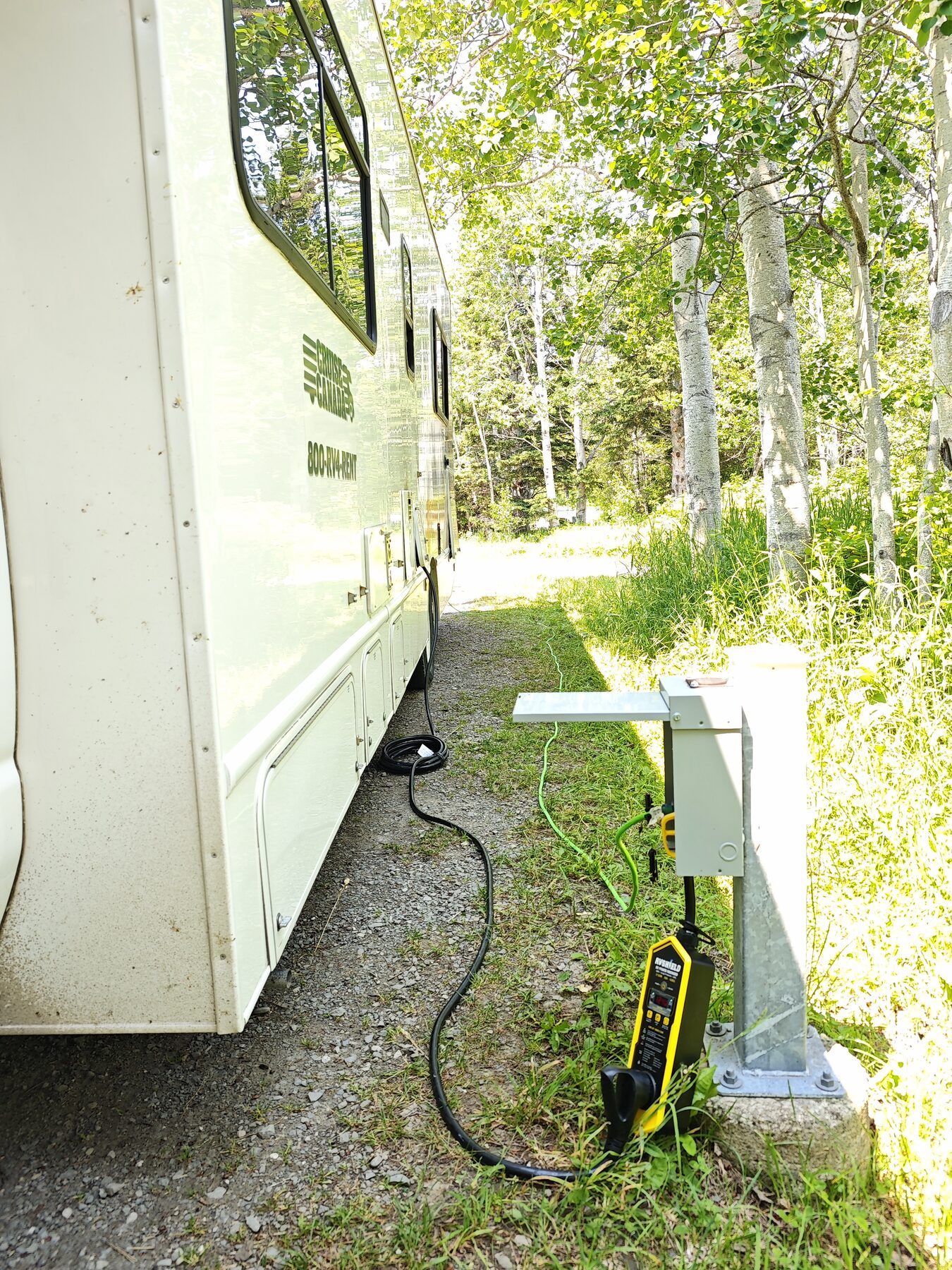
Everything you need to understand, protect, and troubleshoot your RV's shore power connection. Written by people who've read every bad review so you don't have to.

Learn the Grid.

Safety Basics

RV Shore Power 101: What Every Camper Should Know

Understand how 30A vs 50A service works, what happens at the campground pedestal, and the five things to check before plugging in every time.

Safety Basics

How Surge Protectors Actually Work — And Where They Fail

Metal Oxide Varistors, joule ratings, EPO response times, and the three absorption modes. A technical but accessible breakdown for the serious RVer.

Troubleshooting

RVShield Fault Code Reference: What Each Code Means and What To Do

E0 through E8 and Err0 — a complete reference guide. Understand the root cause behind each code and the right action to take before reconnecting.

Troubleshooting

Why Your RV Surge Protector Might Not Be Protecting You (Even When It Shows Green)

The dangerous scenarios where a green light doesn't mean your RV is safe — open grounds, open neutrals, and frequency anomalies that many "smart" protectors miss entirely.

Seasonal Tips

Cold Weather RVing: The Electrical Problems That Only Happen Below 40°F

Why surge protectors fail in winter, what causes false E6 errors in cold temperatures, and how to tell if your device is actually protecting you when it's freezing outside.

Product Guides

AC Compressor Delay Explained: Why 0, 30, or 180 Seconds Matters for Your AC

The physics of compressor restart, what happens when you restart too fast, and a practical guide to choosing the right delay setting for your RV's air conditioning system.

Product Guides

kWh Monitoring in an RV: Understanding Your Energy Consumption on the Road

How to use your RV's kWh data to manage power budgets, identify energy-hungry appliances, and understand what you're actually consuming at each campsite.

Seasonal Tips

Full-Timing with an RV: Power Management Strategies for Year-Round Campers

Managing shore power, generator use, and solar input across all four seasons. Practical strategies from the community of full-time RVers who've learned what works.

Safety Basics

Open Ground, Open Neutral, Reverse Polarity: The Invisible Campsite Hazards

Three wiring faults that a basic plug-in tester can't catch — and that turn your RV's metal frame into a live conductor. What they are, why they happen, and how to detect them.

Print and Keep
in Your RV.

Before You Plug In — Checklist
CHECKPedestal breaker off before connecting
CHECKTT-30 receptacle shows no corrosion, moisture, or damage
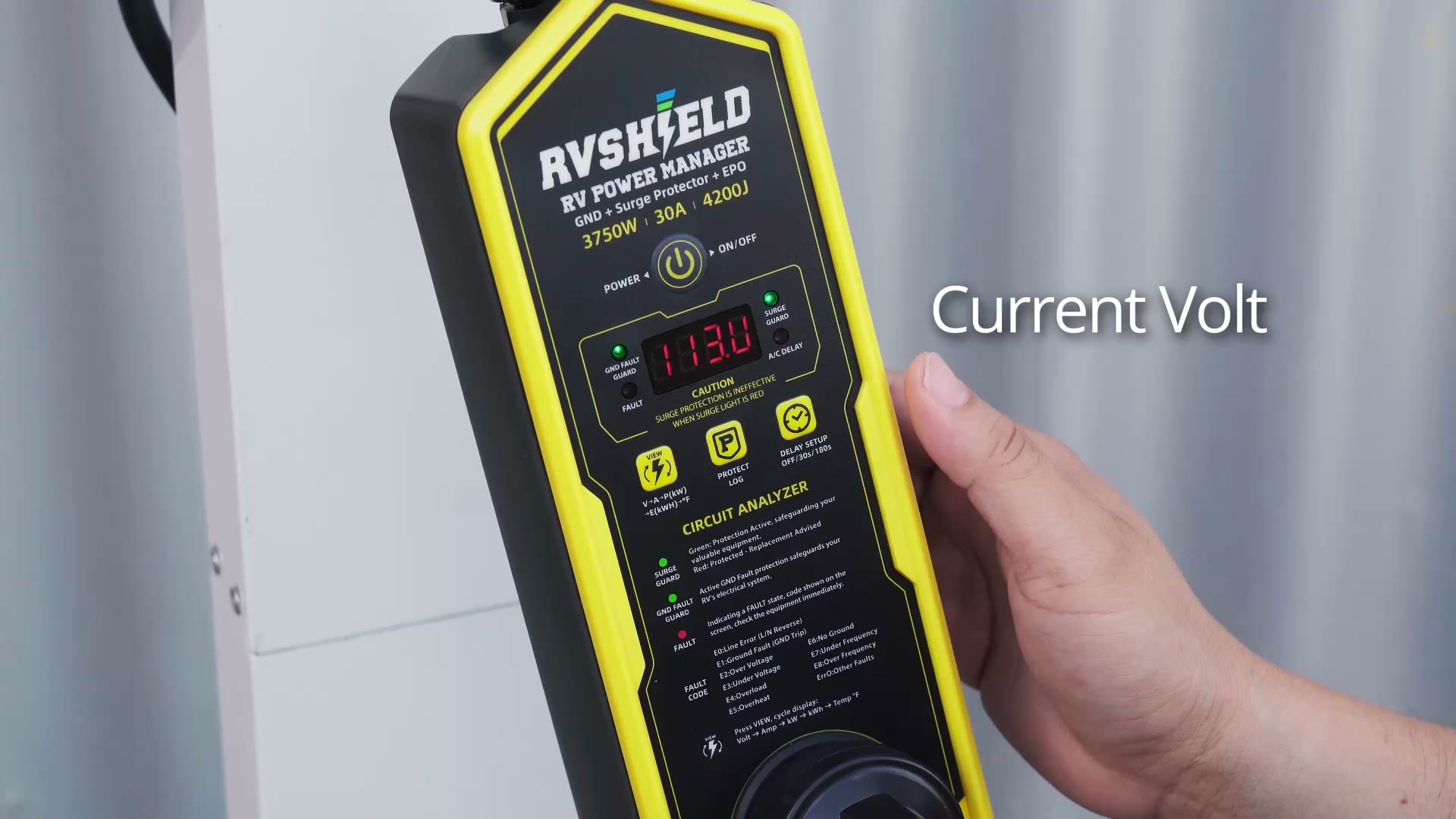
CHECKRVShield display activates and shows voltage within range (108–132V)
CHECKNo fault code displayed — green status
CHECKFrequency reads 58–62Hz (standard shore power)
CHECKAfter AC delay completes, run AC for 5 minutes and verify amperage is normal
Fault Code Quick Reference
CodeMeaningAction
E0Reverse PolarityDo not use pedestal
E1Ground Fault (30mA)Check RV wiring
E2High Voltage >132VWait for grid stabilization
E3Low Voltage <104VTry different site
E4Overload >30AReduce load
E5Over-Temperature 200°FAllow unit to cool
E6Open GroundReport to campground
E7Low Frequency <52HzGenerator overloaded
E8High Frequency >69HzNon-standard source
Err0Internal FaultContact support
Normal Operating Ranges
VOLTAGE108–132V AC · Trip points: <104V or >132V
FREQUENCY58–62Hz normal · Trip: <52Hz or >69Hz
CURRENT0–30A continuous · Trip: >30A for >3 seconds
TEMP (INT)Up to 200°F / 93°C · Auto-shutoff at 200°F
TEMP (AMB)−40°F to +140°F operating range
AC Delay Settings
0 SECONDSUse when manually verifying stable power. No compressor protection — only for brief stable interruptions.
30 SECONDSStandard setting for most campground use. Adequate compressor pressure equalization for normal interruptions.
180 SECONDSMaximum safety. Use after extended outages, severe voltage events, or with older high-amperage AC units.
WARNINGRestarting AC compressor immediately after power interruption can damage the compressor ($800–$2,400 repair).